ADHD and sleep problems often reinforce each other.
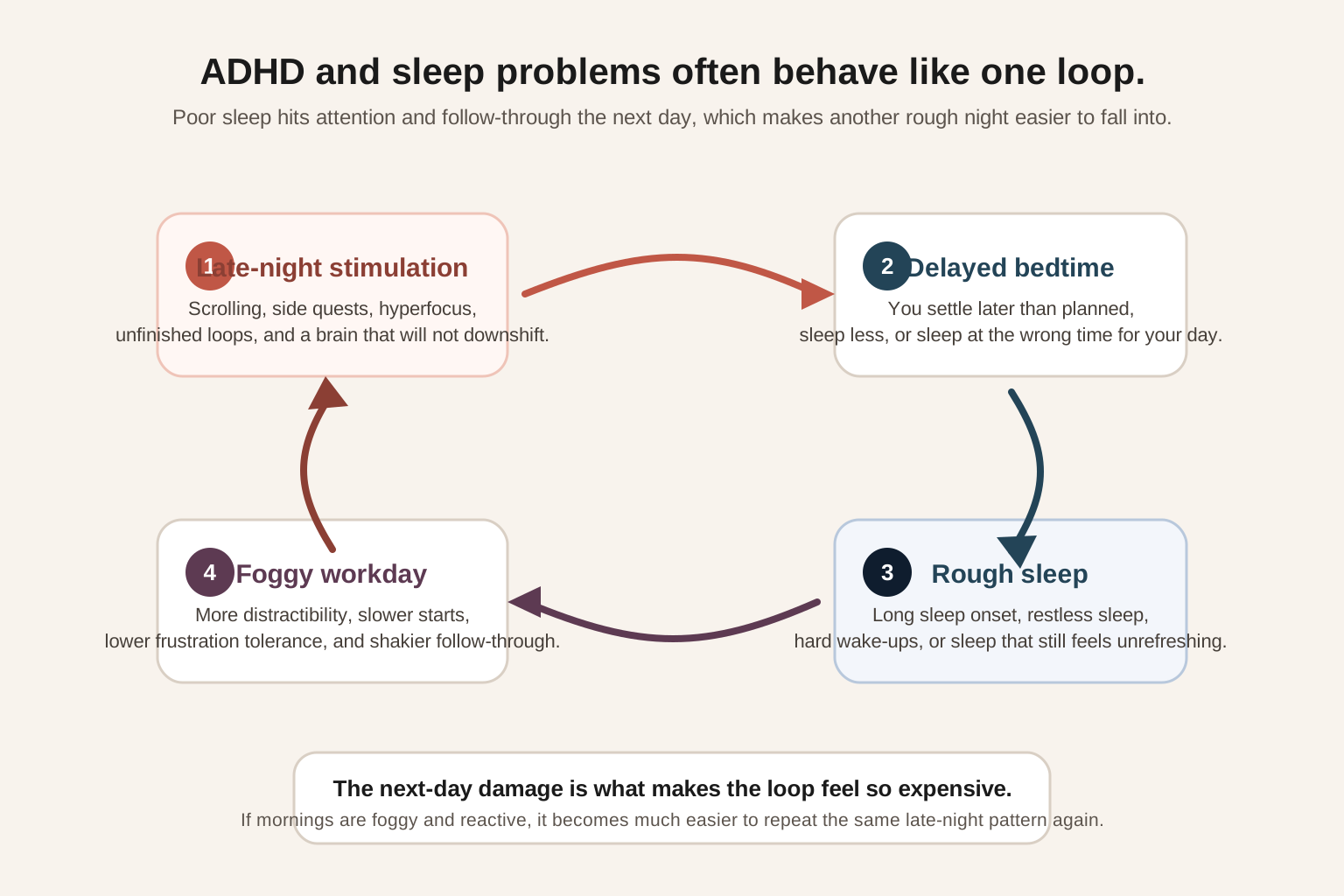
ADHD can make it harder to wind down, stop a late-night hyperfocus spiral, keep a steady bedtime, or wake up at the same time every morning. Then a rough night of sleep makes focus, working memory, emotional regulation, and follow-through worse the next day.
That is one reason the problem feels so frustrating. You are not dealing with sleep on one side and ADHD on the other. You are dealing with one loop.
It is also common. CHADD notes that up to four out of five adults with ADHD have sleep problems. And a review of sleep disturbance in ADHD found the recurring patterns across studies were longer time to fall asleep, shorter sleep, hard morning wake-ups, sleep-disordered breathing, night waking, and daytime sleepiness.
Not everyone has the same pattern. Some adults lie awake for hours. Some feel tired all day but suddenly alert at 11:30 pm. Some sleep long enough on paper and still wake up foggy. Some are dealing with a real sleep disorder on top of ADHD.
But the daytime cost is often similar: slower starts, more distractibility, shakier judgment, lower frustration tolerance, and less ability to follow through on what matters.
How ADHD and sleep problems feed each other
A lot of adults with ADHD know the feeling of being exhausted and still not able to settle.
Part of that is behavioral. If your brain is wired to chase stimulation, bedtime can feel like the most boring possible task right when your self-control is already running low. You put off the transition. You keep scrolling. You keep researching one more thing. You start cleaning the kitchen at midnight. You get caught in a side quest that somehow feels urgent because going to bed does not.
Part of it is timing. Many adults with ADHD skew later, which means they feel more mentally awake at night and less functional early in the morning. So even when they want to sleep earlier, their body does not always cooperate.
And part of it is simple mental activation. Unfinished tasks, emotional residue from the day, and a brain that does not downshift easily can all keep the engine running when you want it off.
Then the next day gets harder.
Poor sleep makes the same executive functions many adults with ADHD already work hard to protect more fragile: attention, working memory, emotional regulation, and impulse control. That is why bad sleep does not just feel like low energy. It can show up as missed priorities, more reactive decisions, slower task starts, and a lower ability to stay with one thing long enough to finish it.
This is the part that wrecks follow-through.
If you wake up foggy, behind, and overstimulated, the workday starts with a deficit. Planning takes more effort. Small interruptions hit harder. The cost of restarting after a distraction goes up. By the end of the day, you are more likely to fall back into the same late-night pattern that caused the problem in the first place.
The sleep patterns adults with ADHD notice most
The phrase sleep problems is too broad to be useful unless you name what it usually looks like.
Trouble falling asleep
This is one of the most common complaints.
You feel physically tired, but your brain does not feel done. Thoughts keep moving. You remember everything you forgot to do. You want one more hit of stimulation before bed. Even when you are in bed, it can take a long time to actually fall asleep.
For some adults, this looks like classic insomnia. For others, it looks more like repeated delay: bedtime keeps sliding later because winding down takes longer than expected every night.
A delayed sleep schedule or a night-owl pattern
Some people with ADHD are not only bad at bedtime. They are shifted later.
That means they feel most alert in the evening, get sleepy later than they want to, and have a harder time waking up for a normal work schedule. This is one reason just going to bed earlier often feels useless. If the problem is partly circadian timing, not only discipline, brute force rarely works for long.
This is also where the tired-but-wired feeling makes sense. You can be clearly sleep-deprived and still feel mentally activated late at night.
Restless or non-refreshing sleep
Falling asleep is not the only problem.
Some adults with ADHD wake up often, sleep lightly, toss around, or sleep through the night and still feel like the quality was poor. You may technically have been in bed long enough and still wake up feeling like your brain never fully reset.
That matters because non-refreshing sleep creates the same practical daytime problems as short sleep: more fog, worse focus, lower patience, and a higher chance of losing the thread during work.
Hard mornings and daytime sleepiness
A lot of adults with ADHD do not mainly think of themselves as bad sleepers. They think of themselves as people who cannot get moving in the morning.
That can mean repeated alarms, long groggy ramps into the day, needing a huge amount of stimulation to feel awake, or feeling sleepy in meetings even after a full night in bed.
Some people also find themselves sleeping longer than expected on weekends or after high-stress stretches and still not feeling restored. That does not always mean the problem is oversleeping by itself. Sometimes it means sleep quality, sleep timing, or an untreated sleep disorder is part of the picture.
When sleep problems may be more than ADHD bedtime friction
Not every ADHD-related sleep issue is just part of ADHD.
Sometimes the real problem is a coexisting sleep disorder. Sometimes poor sleep is making ADHD symptoms look worse than they otherwise would. Sometimes both are happening at once.
A few common patterns are worth ruling out.
Delayed sleep-wake phase disorder
This is more than liking late nights.
It means your natural sleep window is shifted later than the schedule you need to keep. If you regularly do not get sleepy until very late, struggle to wake up at conventional hours, and feel much better on a delayed schedule, this may be part of the picture.
Sleep apnea or other breathing-related sleep problems
If you snore loudly, gasp, choke, wake with headaches, or feel strangely unrefreshed no matter how long you sleep, widen the lens.
Breathing-related sleep problems can leave people exhausted, unfocused, and irritable during the day. That overlap can look a lot like worsening ADHD.
Restless legs syndrome
If your legs feel uncomfortable, twitchy, or impossible to settle at night, that can make sleep initiation much harder.
This is one of the sleep problems that shows up repeatedly in ADHD sleep guidance, and it is easy to miss if you think the whole issue is simply that you are bad at bedtime.
Severe daytime sleepiness or narcolepsy-like patterns
If you are overwhelmingly sleepy during the day, dozing off unintentionally, or struggling to stay awake in situations where most people would stay alert, take that seriously.
Ordinary bedtime procrastination usually does not explain severe daytime sleepiness on its own.
Sleep deprivation can mimic worse ADHD
This is an important point.
Poor sleep can make anyone less focused and more irritable. In adults with ADHD, the overlap is especially messy because the symptoms stack on top of each other. You may assume your ADHD is suddenly much worse when part of the problem is that your sleep has quietly collapsed.
That is one reason the right next step is not always better productivity tactics. Sometimes it is a sleep evaluation.
What to try first if ADHD is hurting your sleep
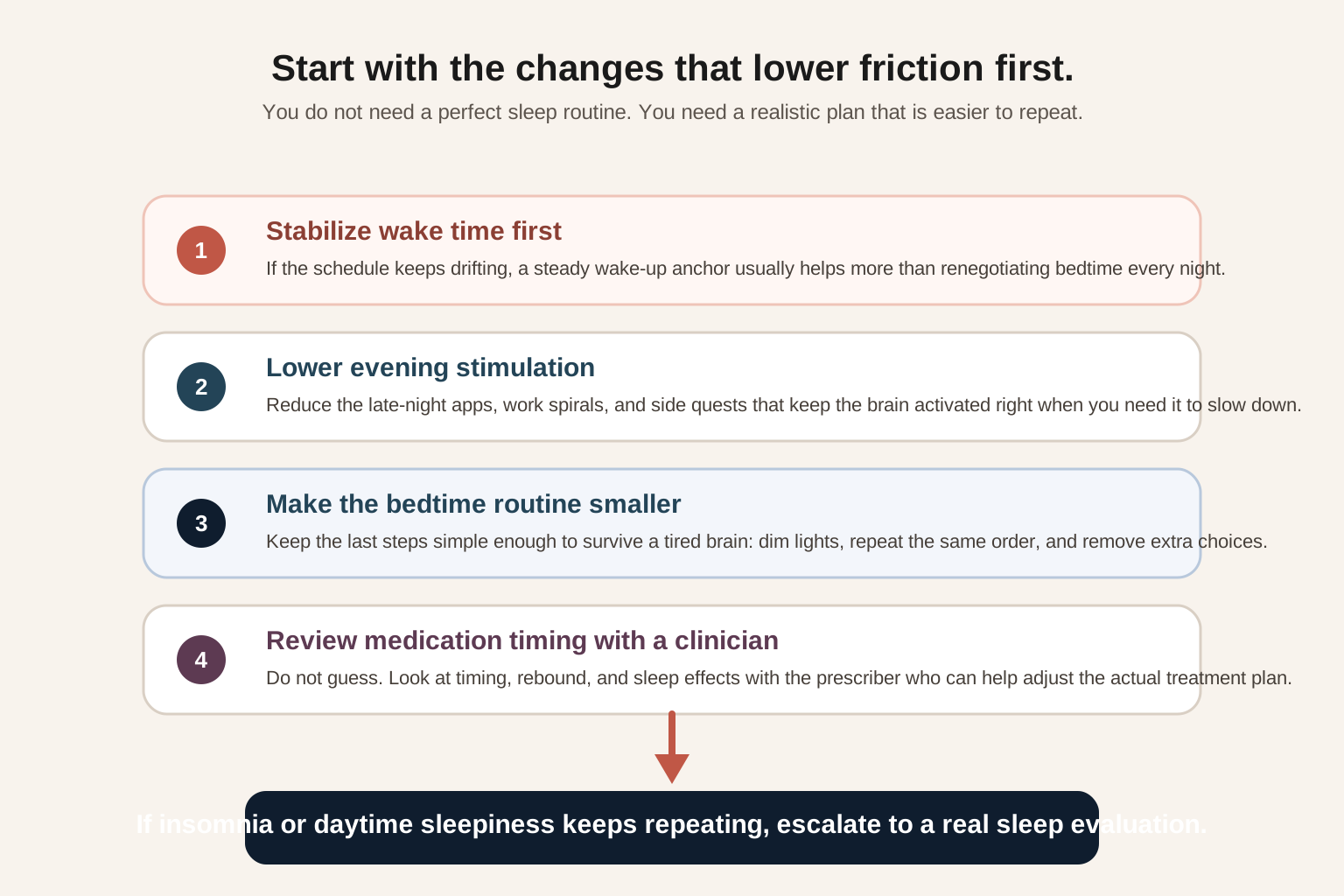
You do not need a perfect bedtime ritual. You need a few changes that lower friction and make the pattern easier to repeat.
1. Stabilize wake time before chasing the perfect bedtime
If your sleep schedule is drifting, a consistent wake time often helps more than constantly renegotiating bedtime.
That does not mean you will fall asleep earlier on command right away. It means you start giving your body one stable anchor. Over time, that usually matters more than aiming for an ideal bedtime you almost never hit.
2. Lower evening stimulation
Late-night stimulation is a major trap for ADHD brains.
That can be screens, but it can also be work, gaming, research spirals, online shopping, emotionally activating conversations, or a burst of hyperfocus on something that feels harmless until you realize it is 1:14 am.
The goal is not to become monk-like. The goal is to make the last part of the evening less activating.
That might look like:
- setting an alarm for when the bedtime routine starts, not only when sleep should happen
- putting the most absorbing apps or devices farther away
- avoiding late-night problem-solving sessions
- choosing one low-stimulation transition activity you can repeat most nights
3. Make the bedtime routine easier, not more ambitious
A lot of sleep advice fails because it assumes high executive function right when executive function is lowest.
If your routine needs perfect discipline, it is probably too complicated.
Keep it small. Dim lights. Reduce noise. Do the same few steps in the same order. Make the path to bed shorter, not more impressive.
4. Review medication timing with your clinician instead of guessing
Medication can cut both ways.
For some adults, stimulant timing makes it harder to fall asleep. For others, more stable ADHD treatment actually helps sleep because the evening is less chaotic and mentally activated.
That is why it is better to review timing, dose, and rebound patterns with your prescriber than to make random changes on your own.
5. If insomnia is chronic, think beyond generic sleep hygiene
Basic sleep hygiene can help mild problems. Chronic insomnia usually needs more than a nicer routine.
In CHADD's adult sleep guidance, CBT-I is described as the gold-standard treatment for insomnia because it addresses the thoughts and behaviors that keep the problem going. That is much more useful than endlessly collecting bedtime tips if you have been struggling for weeks or months.
6. Consider circadian support when the pattern is clearly delayed
If your main issue is a later sleep schedule, the conversation may be less about trying harder and more about shifting timing.
A review on managing sleep in adults with ADHD found the strongest repeated intervention evidence for morning bright light therapy, with preliminary support for melatonin timing and behavioral approaches. That does not mean you should self-experiment wildly. It does mean delayed timing is a real pattern with real treatment options.
When to talk to a clinician
A short rough patch is one thing. A repeating pattern is another.
It is worth getting help if you notice any of the following:
- persistent insomnia that is not improving
- severe daytime sleepiness
- loud snoring, gasping, or choking at night
- leg discomfort or unusual movement that keeps sleep from settling
- frequent morning headaches or waking up unrefreshed no matter what
- medication questions that keep coming up around sleep timing or evening rebound
A clinician can help sort out whether you are dealing with bedtime friction, insomnia, circadian delay, a breathing-related sleep problem, restless legs, or something else that needs a different fix.
This matters because some ADHD sleep problems are really untreated sleep disorders hiding in plain sight.
Conclusion
ADHD and sleep problems are hard because they compound each other.
ADHD can make it harder to shut the day down, stick to a routine, and fall asleep on time. Then poor sleep makes the next day feel heavier, foggier, and harder to steer. That is why the damage often shows up as worse follow-through, not just feeling tired.
The goal is not perfect sleep.
The goal is fewer late-night traps, a steadier rhythm, and a clearer sense of when the problem has moved beyond routine friction into something that deserves treatment.
And if sleep is only one part of why work keeps stalling once the day starts, in-the-moment support can help on the execution side too. Attention Copilot is built to reduce task-start friction during the day.
FAQ
Can ADHD cause insomnia?
ADHD does not guarantee one single sleep disorder, but it is strongly linked with insomnia-like patterns. Many adults with ADHD take longer to fall asleep, struggle to power down at night, or keep drifting into later bedtimes.
Why do people with ADHD feel tired but wired at night?
That pattern usually comes from a mix of later sleep timing, high evening stimulation, unfinished mental loops, and difficulty shifting out of hyperfocus. You can be sleep-deprived and still feel mentally activated late at night.
Do ADHD medications always make sleep worse?
No. Timing matters, and the effect is not the same for everyone. Some people do have more trouble sleeping when medication runs too late, but some sleep better when ADHD symptoms are more stable overall. That is why medication-related sleep changes are best reviewed with a clinician.
Is sleeping too much part of ADHD?
Sometimes adults with ADHD do sleep long hours or feel very sleepy during the day, but that does not automatically mean ADHD alone is the cause. If oversleeping or heavy daytime sleepiness keeps happening, it is worth looking at sleep quality, sleep timing, medication effects, and possible coexisting sleep disorders.