Mental fatigue is what it feels like when your brain has less useful attention left than the day still demands.
It often shows up before people name it. You reread the same paragraph. Easy decisions start feeling oddly heavy. You get impatient, make small mistakes, and keep bouncing between tasks without really moving any of them forward.
A 2023 review of mental fatigue research describes it as a tired state caused by prolonged cognitively demanding activity, and notes that it can weaken attention and executive function. In plain English, your mind keeps working, but it does not keep working well.
If you want the short version first, the fastest way to recover is usually to stop pretending you still have full bandwidth. Step away from the hardest version of the task, take a real break, reduce the number of open loops, handle the basics like water and food, and come back with one smaller next step.
What mental fatigue actually is
Mental fatigue is not the same as ordinary reluctance.
It is the drop-off that happens after too much sustained mental load. That load can come from deep thinking, constant decisions, nonstop context switching, emotional strain, or long stretches of work without enough recovery.
People use "mental fatigue," "mental exhaustion," and "feeling mentally drained" almost interchangeably. For most readers, the core experience is the same: your brain feels used up.
It helps to separate mental fatigue from a few related states:
- Physical tiredness: your body needs rest, even if your thinking is still fairly clear.
- Stress: stress can make you feel alert, tense, and wired. Mental fatigue feels more depleted and foggy. The two often overlap.
- Burnout: burnout is broader and more persistent. Mental fatigue can be part of burnout, but it can also show up after one overloaded day or week.
That distinction matters because the response is not always the same. Sometimes you need a short reset. Sometimes you need a workload change. Sometimes you need medical or mental health support.
It also matters because mental fatigue is real, not imaginary. A 2025 Johns Hopkins study found measurable changes in brain areas tied to effort and working memory when participants reported cognitive fatigue. You do not need a scanner to know your brain is tired, but it helps to remember that this is more than a motivation problem.
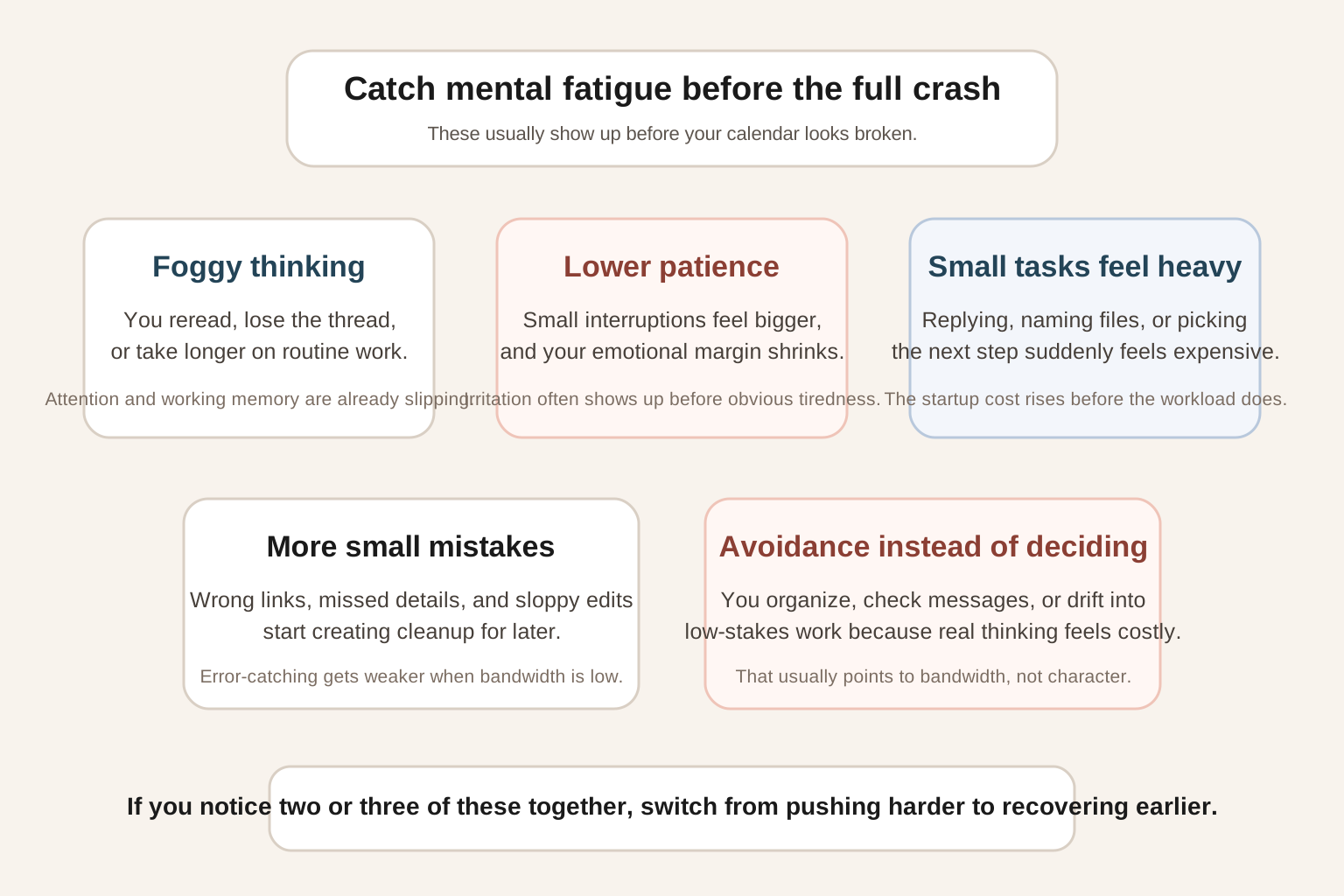
Mental fatigue symptoms: how it usually shows up early
Mental fatigue is much easier to deal with when you catch it early.
A lot of people wait until they are completely flattened. The earlier signs are quieter.
1. You stop thinking clearly
This is usually the first clue.
You may find yourself:
- rereading the same sentence
- forgetting what you opened the tab to do
- losing the thread in meetings
- struggling to choose between simple options
- taking much longer than normal to finish routine work
Mental fatigue tends to weaken attention, slow information processing, and make executive control feel shakier.
2. Your patience drops
Mental fatigue often changes your emotional bandwidth before it changes your calendar.
You may become short-tempered, more reactive, or strangely sensitive to minor interruptions. Small requests can feel much bigger than they are because you do not have much cognitive margin left.
3. Easy tasks start feeling heavy
A task does not have to be objectively difficult to feel impossible under mental fatigue.
Replying to one email, renaming a file, or choosing what to do next can suddenly feel like a high-effort decision. That is one reason mental fatigue gets mistaken for laziness. The task is small, but the startup cost feels huge.
4. You make more small mistakes
Mental fatigue makes it harder to catch and correct errors quickly.
In knowledge work, that can look like:
- sending the wrong link
- missing a basic detail in a document
- forgetting a promised follow-up
- making sloppy edits you would usually catch
- doing shallow work that creates cleanup later
5. You start avoiding instead of deciding
When your brain is tired, avoidance can look safer than action.
So you procrastinate, drift into easy low-stakes tasks, organize instead of start, or keep checking messages because real thinking feels too expensive.
If that sounds familiar, the problem may be bandwidth, not character.
What causes mental fatigue at work and in daily life
Mental fatigue usually comes from load stacking, not one dramatic event.
Here are some of the biggest drivers.
Prolonged cognitive effort
Some work is simply demanding. Planning, writing, analyzing, prioritizing, problem-solving, and holding multiple constraints in mind all burn mental energy.
That is the obvious version.
Too many open loops
The less obvious version is scattered cognitive load.
Mental fatigue does not come only from one hard task. It also comes from trying to keep too many things mentally active at once: messages, deadlines, errands, unfinished decisions, background worries, and work you still have not defined clearly.
Research on attention residue helps explain why. When you switch from one task to another, part of your attention can stay stuck on the earlier task, especially if it was interrupted or left unfinished. That leaves fewer cognitive resources for what you are trying to do now.
This is why mental fatigue often feels worse on fragmented days than on busy-but-focused ones.
Constant switching and interruption
A day full of pings, meetings, context changes, and partial starts is mentally expensive.
You never get the clean reset that lets your brain settle into one thing. Instead, you keep paying the restart cost.
Long hours without real recovery
A short scroll break is not always a recovery break.
If you work for hours with no true detachment, or if your day ends but your mind keeps chewing on unfinished work, the load keeps accumulating. That is one reason people can feel mentally tired even after technically being off.
Stress, poor sleep, and neglected basics
Work design matters, but it is not the whole story.
Stress, bad sleep, dehydration, under-eating, illness, anxiety, depression, and heavy life circumstances can all lower your mental stamina. In other words, mental fatigue is often a mix of workload, life load, and recovery quality.
How to recover faster when you notice mental fatigue
Recovery starts with honesty.
If your brain is already foggy, pushing harder usually makes the next hour worse, not better.
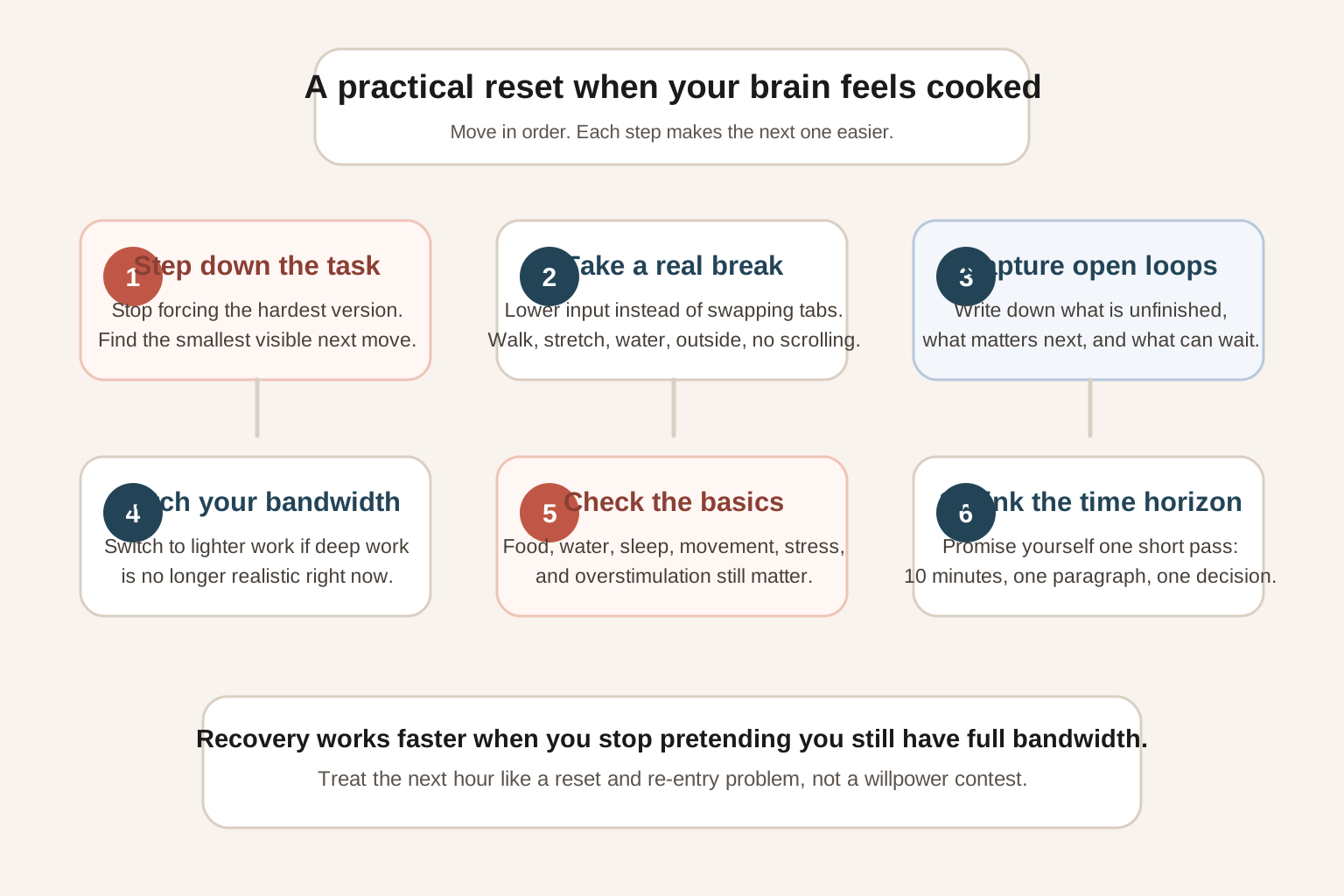
Here is a practical reset sequence.
1. Stop doing the hardest version of the task
If you are trying to force deep work while mentally spent, step down the difficulty.
Do not ask, "How do I finish the whole thing right now?"
Ask:
- What is the next visible step?
- What part still requires real thinking?
- What can wait until my brain is better again?
This is also where a smaller task shape helps. If your brain feels fried, "finish proposal" is too heavy. "Draft the opening paragraph" or "list the three decisions still open" is easier to re-enter.
2. Take a real break, not a fake one
A fake break is when the task stops but the input keeps going.
Examples:
- doomscrolling
- checking Slack "for one minute"
- opening email during lunch
- switching from focused work to a different mentally demanding task
A real break lowers input.
Short breaks every one to two hours can help during long stretches of mental work. In practice, the best break is usually basic:
- stand up
- walk
- get outside if you can
- stretch
- drink water
- stop looking at screens for a few minutes
Movement helps because it changes the state you are in, not just the tab you are on.
3. Reduce the number of open loops
If five things are half-active in your head, your break will not fully land.
Write them down.
Capture what is unfinished. Note the next step. Decide what is not happening today. Give yourself one place to park the rest.
This is one reason end-of-day shutdown rituals help. Your brain relaxes faster when it can trust that unfinished work has somewhere to live besides your working memory.
4. Match the next task to your actual bandwidth
Not every hour is for deep work.
If you are mentally fatigued, it may be smarter to switch to lower-load tasks for a while:
- admin
- simple follow-ups
- filing
- calendar cleanup
- light editing
- routine communication
Save the hard thinking for the part of the day when you have more useful attention.
5. Check the boring basics
When mental fatigue hits, people often look for a clever productivity fix first.
Check the basics anyway:
- Have you eaten recently?
- Have you had water?
- Did you sleep badly?
- Have you been sitting still too long?
- Are you overstimulated?
- Are you trying to work through stress that needs its own response?
These are not glamorous fixes, but they matter.
6. If you absolutely must keep going, shrink the time horizon
Sometimes you do need to keep moving.
In that case, do not promise yourself the whole task. Promise yourself 10 focused minutes. One paragraph. One decision. One cleanup pass.
Short, defined sprints are easier to start when mental fatigue is high because they remove the feeling of endlessness.
How to prevent mental fatigue from stacking up again
The best long-term fix is not becoming better at suffering through it.
It is designing your work so you hit the wall less often.
Protect your best mental hours
Your brain does not have the same capacity all day.
Use your highest-bandwidth windows for work that needs real thinking: planning, writing, strategy, hard decisions, deep execution.
Use lower-bandwidth windows for lighter tasks.
Many people accidentally do the reverse. They give their best hours to messages and meetings, then try to think deeply once their brain is already depleted.
Lower the switching cost
You do not have to do everything one task at a time forever. But if your day is constant switching, mental fatigue will show up faster.
A few ways to reduce it:
- batch communication instead of checking constantly
- keep fewer active priorities at once
- define the next step before you stop
- protect blocks where one task gets full attention
Build better break rhythm
Breaks work better when they happen before you are wrecked.
If you wait until you are fully cooked, you are not really taking a break. You are recovering from a crash.
Short, regular resets usually work better than heroic nonstop effort followed by a collapse.
Close the day instead of leaking into the night
One of the sneakiest causes of mental fatigue is work that never really ends.
Even if you stop typing, you may still be mentally running the list.
A short shutdown habit helps:
- look at what is unfinished
- choose what matters next
- capture any loose ends
- define one clear re-entry point for tomorrow
That reduces the mental drag of starting again.
Fix the work, not just your tolerance
If mental fatigue keeps repeating, do not only ask how to cope better.
Also ask:
- Is my workload unrealistic?
- Am I doing too much reactive work?
- Are tasks too vague?
- Do I have too many parallel commitments?
- Is this really a planning problem, or an execution problem?
Sometimes the answer is a better calendar. Sometimes it is clearer task design. Sometimes it is saying no sooner.
And sometimes the list is already clear, but follow-through still breaks once the day gets noisy. In-the-moment support can help there. Attention Copilot is built for that execution gap, and Attention Copilot for Teams applies the same idea to shared work.
When it might be more than a bad day
Not all mental fatigue is a normal workday problem.
If it keeps happening, lasts for weeks, or comes with other symptoms, it may be worth looking beyond productivity tactics.
Pay attention if you notice:
- persistent exhaustion even after rest
- major sleep problems
- feeling hopeless, numb, or low for more than a couple of weeks
- heavy anxiety
- physical symptoms that keep showing up
- trouble functioning at work or at home
That does not automatically mean something severe is wrong. It does mean the right next step may be medical or mental health support, not another focus hack.
Conclusion
Mental fatigue is what happens when your brain has been carrying more than it can cleanly process.
It usually shows up early as foggier thinking, lower patience, more mistakes, and heavier startup friction. If you catch it there, recovery gets much easier.
The goal is not to become someone who can grind through anything.
The goal is to notice the signs sooner, lower the load that caused them, and build a work rhythm your brain can actually sustain.
FAQ
What does mental fatigue feel like?
Mental fatigue often feels like brain fog plus friction. You may reread things, lose focus easily, feel more irritable, make small mistakes, and struggle to start even simple tasks.
Why am I mentally tired even after sleeping?
Sleep helps, but it is not the only lever. You can still feel mentally tired after sleeping if you are carrying too much cognitive load, high stress, too much switching, unresolved worry, poor sleep quality, or an underlying mental or physical health issue.
Is mental fatigue the same as burnout?
No. Mental fatigue can be short-term and show up after a hard or fragmented day. Burnout is broader and more chronic. Mental fatigue can be part of burnout, but they are not the same thing.