Yes, the Pomodoro Technique can work for ADHD. But it usually works best when you stop treating the classic 25-minutes-on, 5-minutes-off version like a rule.
For a lot of ADHD adults, the hard part is not understanding the method. It is getting started, staying with the task long enough to matter, and coming back after the break without losing the thread. That is why Pomodoro can feel amazing one day and completely useless the next.
The fix is usually not "try harder." It is changing the block length, the break, the task size, or the stop rule so the method works with your attention instead of against it.
Research on Pomodoro specifically for ADHD is limited, so the useful test is practical: does this setup make it easier to start, stay with the work, and come back after the break?
The quickest way to make Pomodoro work better for ADHD
If you want the short version first, start here:
| If this keeps happening | Change this |
|---|---|
| Starting feels impossible | Shrink the task and start with a 10 to 15 minute block |
| The timer goes off right when you finally lock in | Try 40 to 45 minutes or use a softer stop rule |
| Breaks turn into 30 minutes of scrolling | Take movement or no-screen breaks |
| You come back and forget what you were doing | Leave a one-line restart note before the break |
| Interruptions wreck the whole session | Capture the next step quickly and restart a fresh block |
That is the main idea of ADHD-friendly Pomodoro: keep the structure, change the parts that keep breaking.
What the Pomodoro Technique is, briefly
The Pomodoro Technique is a focus method built around short work intervals and deliberate breaks.
The classic version looks like this:
- Choose one task.
- Work on it for 25 minutes.
- Take a 5-minute break.
- Repeat.
- After a few rounds, take a longer break.
That structure helps because it turns "focus for the whole afternoon" into something much smaller and more visible.
And that is really the point. Not the exact number. Not the tomato timer. Just a clear boundary around one piece of work.
Why Pomodoro can help ADHD in the first place
Pomodoro helps some ADHD brains because it makes work feel smaller, clearer, and more concrete.
It lowers the barrier to starting
A lot of ADHD friction happens before the work even begins.
If the task feels too big, too vague, or too emotionally loaded, your brain has to fight the startup cost before you make any progress. A timer can help because "work on this for 10 minutes" feels easier to begin than "finish this whole thing today."
That is one of the biggest reasons Pomodoro works when it does. It shrinks the ask.
It makes time feel more real
For many people with ADHD, time does not feel steady. It feels slippery.
A short timer helps because it turns the next block of work into something you can actually see. Instead of dealing with a vague future task, you only have to deal with this block right now.
That can be enough to cut through time blindness and make the next step feel reachable.
It contains overwhelm
When a task feels like one giant blob, your brain has to hold too much at once.
Pomodoro reduces that load. You do not need to solve the entire project. You only need one block. That is often enough to get traction.
It can protect your energy when breaks are real
Many people do not actually take breaks. They just work until their attention collapses, then drift into distraction.
Planned breaks can be better than that. They give your brain a reset before you hit the wall - if the break is actually restorative.
Why the classic 25/5 version often fails for ADHD
This is the part many articles skip.
The reason people say "Pomodoro does not work for my ADHD" is usually not that the whole method is bad. It is that the classic version clashes with one of the exact things they struggle with.
Sometimes 25 minutes is too long
If starting is the hardest part, 25 minutes can still feel like a lot.
When you are already resistant, overwhelmed, or avoiding the task, even a "short" focus block can feel too heavy. In that situation, 10 or 15 minutes is often a better entry point.
Sometimes 25 minutes is too short
This is the opposite problem, and it is just as common.
For some ADHD adults, it takes 20 minutes just to settle. If the timer rings right as your brain finally clicks into the work, the break does not feel helpful. It feels like sabotage.
That is why a rigid 25/5 rhythm is such a bad universal rule. Some people need a shorter runway. Others need a longer one.
Breaks can be harder than the work block
A break only helps if you can come back from it.
If every 5-minute break turns into checking messages, opening social media, or wandering into a bunch of little side quests, the method will not feel supportive. It will feel like self-interruption on purpose.
Vague tasks make the timer useless
If your task is "work on project" or "catch up on everything", the timer is not going to save you.
Pomodoro works best when the task has a visible finish line. If the task is still fuzzy, the block will often become 25 minutes of orbiting the work instead of doing the work.
Strict stops can break hyperfocus
This is the biggest reason some ADHD people hate Pomodoro.
If the rare hard part is finally getting into flow, then a timer that forces you out of it can do real damage. In that case, Pomodoro can work better as a way to start focus than as a rule that interrupts every focused block.
How to set up an ADHD-friendly Pomodoro routine
The best version is usually simpler and more flexible than people expect.
1. Pick a task with a visible finish line
Do not start with a vague label.
Bad Pomodoro tasks:
- work on proposal
- clean inbox
- fix project
- study
Better Pomodoro tasks:
- draft the intro and first section
- clear the 10 oldest emails
- review one pull request and leave comments
- answer 5 practice questions
- outline tomorrow's meeting notes
A clear finish line matters because it lowers startup friction. The brain knows what "done for this block" looks like.
2. Match the interval to the real problem
Do not choose the timer based on tradition. Choose it based on what keeps going wrong.
Try this starting point:
- 10 to 15 minutes if the hardest part is getting started
- 25 minutes if you want a neutral default
- 40 to 45 minutes if you usually lose momentum right as focus begins
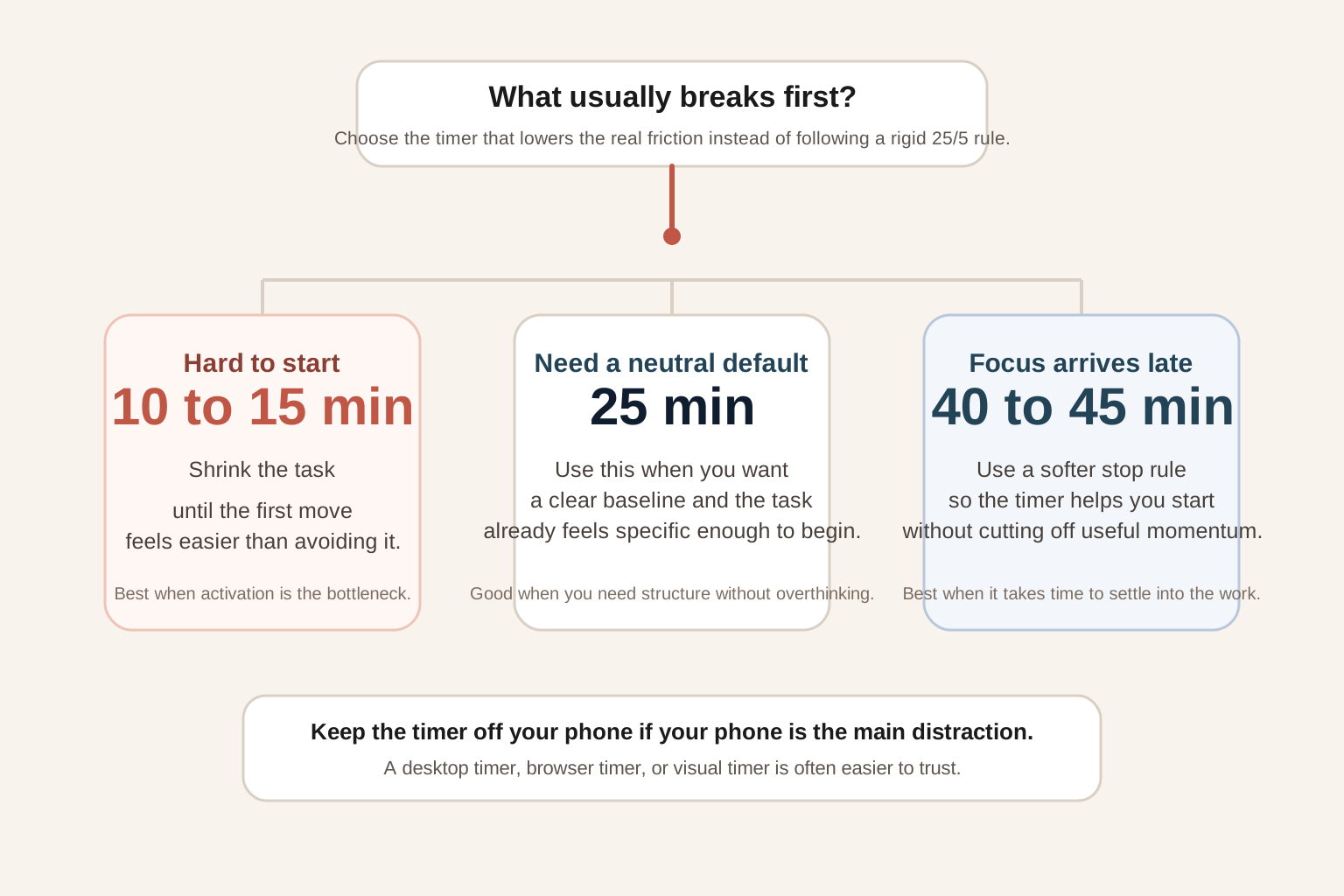
The right question is not "What is the official Pomodoro length?"
It is "What gives me the best chance of starting and staying with this task?"
If you keep quitting before the block ends, go shorter. If you keep getting cut off right when the work gets good, go longer.
And if your phone is the thing that keeps hijacking the block, do not make your phone the timer. A simple desktop timer, browser timer, or visual timer can be easier to trust.
3. Make breaks easy to come back from
The best break is not the most entertaining one. It is the one you can return from.
Better ADHD-friendly breaks usually look like this:
- stand up and stretch
- get water
- walk to another room
- step outside for a minute
- do one tiny physical reset
Worse breaks usually look like this:
- check Slack
- open social media
- start another tab spiral
- stay in the same chair and hope it counts as rest
If your breaks keep swallowing the next hour, the problem may not be the timer. It may be that the break is built around the exact thing that derails you.
4. Leave yourself an on-ramp back in
A lot of ADHD frustration is really restart frustration.
Before the break, write one sentence about what happens next.
Examples:
- next: finish the comparison table
- next: answer emails 11 through 20
- next: fix the opening paragraph
- next: summarize the call notes in bullets
That one line removes the "wait, what was I doing again?" gap when you come back.
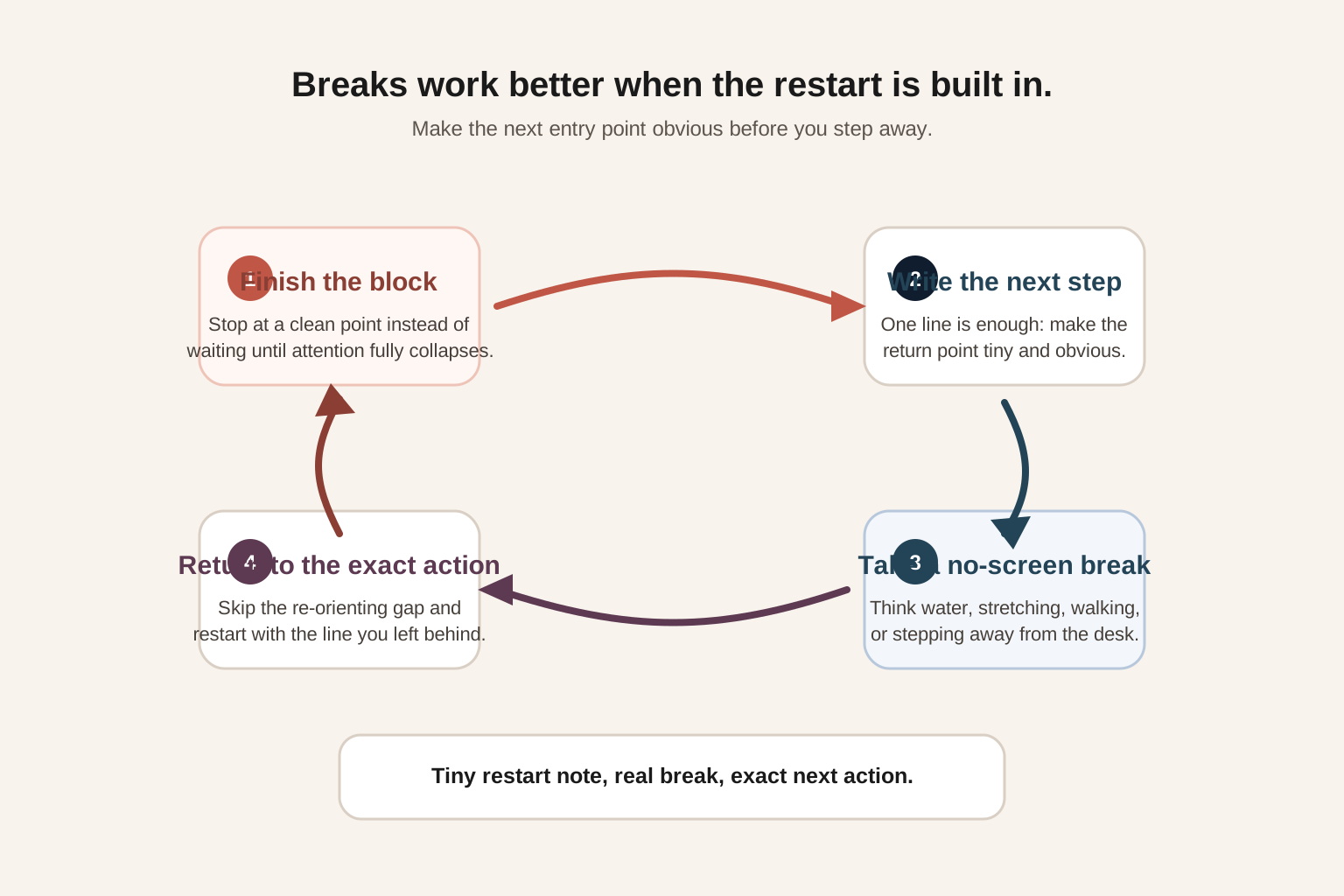
If stopping feels especially abrupt, add a short wrap-up buffer at the end of the block. Use the last minute to write your next step, save the file, and clear the mental desk a little before you walk away.
5. Decide how you will handle interruptions and flow before they happen
Pomodoro fails fast when you treat every interruption like proof that the day is ruined.
A better rule:
- if the interruption is small, write it down and return to the task
- if it is real and urgent, handle it, then restart with a fresh block
And if you are in real flow when the timer rings, you do not always need to stop on command.
Sometimes the timer is protecting you from endless drift. Sometimes it is cutting off the one good stretch of attention you have managed to find.
That is why the real question is: is the timer helping this block, or breaking it?
When Pomodoro works best - and when it is the wrong tool
Pomodoro is most useful when the task is clear enough to start and the main problem is activation, time drift, or overwhelm.
It tends to work well for:
- starting a task you keep avoiding
- bounded writing or admin work
- getting through a backlog one visible chunk at a time
- keeping time from disappearing on lower-interest tasks
It is a weaker fit when:
- the work needs long uninterrupted immersion
- your day is too meeting-heavy for blocks to survive
- the timer itself creates pressure or anxiety
- the real problem is overload, not focus
- the task is still too vague to begin
That last point matters.
A timer cannot fix unclear priorities. It cannot fix impossible workload. And it cannot make a vague project feel specific if you have not broken it down yet.
Sometimes the right answer is not a different Pomodoro setup. It is a smaller task, a different work block, clearer priorities, or a different kind of support.
Common mistakes that make Pomodoro worse for ADHD
A lot of people bounce off the method for predictable reasons.
Using one timer for every kind of work
Admin, writing, planning, studying, and deep creative work do not all need the same rhythm.
Treating the timer like a morality system
Pomodoro is supposed to support focus, not create timer guilt.
If you miss a session, reset. If the interval is wrong, change it. If the method is bad for this kind of work, stop using it here.
Letting the break become the real task
If the break is phone-first, the next block may never happen.
Starting with a task that is still too big
The block should have a visible finish line. If it does not, the timer often becomes a countdown to frustration.
Using Pomodoro to force through total overload
When the real problem is exhaustion, impossible deadlines, or a day built around nonstop interruptions, a timer can help you choose the next block. It cannot solve the whole system by itself.
Final takeaway
The Pomodoro Technique can help ADHD when it makes the work easier to enter, easier to see, and easier to return to.
What usually matters is not the classic 25/5 formula. It is whether you are using:
- a task small enough to start
- a block length that matches your real bottleneck
- a break you can come back from
- a stop rule that protects focus instead of killing it
Keep the parts that help. Drop the parts that create friction.
And if the hardest part is not setting a timer but actually staying with the work once resistance kicks in, Attention Copilot offers real-time support while you work, and Attention Copilot for Teams helps teams build healthier focus habits together.
FAQ
Is the Pomodoro Technique good for ADHD?
It can be. It often helps when the main problem is starting, time blindness, or overwhelm. It is less helpful when the timer interrupts real flow, makes you anxious, or gets paired with breaks that derail you.
What Pomodoro interval works best for ADHD?
There is no single best interval. A lot of people do well starting with 10 to 15 minutes when activation is hard, 25 minutes as a general default, or 40 to 45 minutes when momentum takes time to build.
What if breaks always derail me?
Change the break before you give up on the method. Use movement, water, stretching, or stepping away from the desk. Leave a one-line restart note before the break so you know exactly how to come back.
Should I stop when the timer rings if I am finally focused?
Not always. If the timer is protecting you from endless drift, stopping may help. But if the rare hard part is finally getting into useful flow, a strict stop can do more harm than good. In that case, use the timer more flexibly.