Customer story

How Nick Mares makes time to build Light Labs while running it

Read Nick’s story
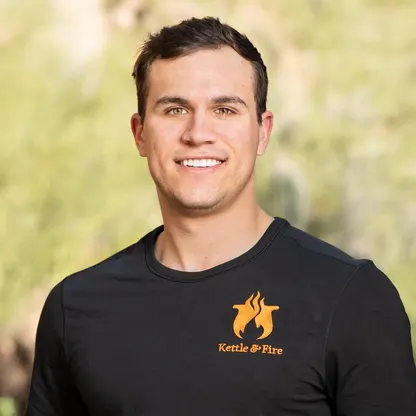
Nick Mares

Nick Mares

CEO and co-founder, Light Labs; Co-founder, Kettle & Fire; 2016 Thiel Fellow

Most people have never really been taught what deep work looks like, or experienced how much they can get done when they block out the noise and focus. The sessions create a weekly space to shut out the noise for two hours and lock in. Do it enough times, and it starts to become a habit you can carry into your own mornings, not just something that happens when you have the meeting scheduled. It’s really a form of training.

— Nick Mares

Building Light Labs after Kettle & Fire

Nick founded Light Labs in 2024 with Vijay Manohar and raised $10.5 million in the company's first months. Their lab tests food and supplements for contaminants, and their software helps brands understand and share the results.

After roughly a year of building, Nick and his team launched publicly with hundreds of food and supplement brands already using Light Labs. Its customers include AG1, Chomps, Seed Health, Serenity Kids, Momentous, and David Protein.

Nick and his brother Justin Mares had previously co-founded Kettle & Fire, a consumer bone broth brand that later surpassed $100 million in annual revenue. They brought in managers early, allowing them to delegate more and focus on scaling.

At Kettle & Fire, Nick describes the next steps as relatively clear: sell more broth and build the capacity to meet demand. Light Labs has a broader ambition: to change how an established testing industry operates and help reshape the incentives around food quality. That involves developing lab operations, software, and new ways for brands to use and share their results, all at once. Its goal is to make rigorous testing and transparency commercially valuable, giving brands a reason to improve their products and show customers the evidence. For Nick, building toward that goal requires more judgment about what to pursue, how the pieces fit together, and what kind of organization can carry it forward.

Working on the business while working in it

We started working with Nick in December 2025, as he was beginning to scale Light Labs. He was managing a growing team while still doing substantial work himself. He needed to hire people, transfer context, and clarify who owned which decisions. He also had his own work to complete and people who needed his input before they could move forward.

AI tools were expanding the scope of what he could do himself, from research and drafting to working through complex operational questions. With more within reach, he had more choices about where to spend his attention. He needed to decide which problems to take on directly and where his time would be better spent building the team and systems to handle them.

“I’m very comfortable working in the business,” Nick said. “Just because you can control it way more.”

Working on the business meant spending more time on culture, leadership, and planning, and trusting other people with work he had been used to doing himself. He felt good about his team and the structure they were putting in place. His own challenge was becoming more comfortable relinquishing control and giving more attention to the responsibilities he believed he needed to lead: talent, capital, and vision.

Nick had already tried protecting time with no-meeting Wednesdays and blocks reserved for focused work. Keeping that time meant repeatedly choosing between the work he had planned and a problem that needed his attention now. He would respond to urgent emails or Slack messages, help resolve an operational problem, or take a meeting on a day he had intended to keep clear. He had real reasons to make those exceptions, and over time more of his protected hours went to firefighting.

Nick was getting a lot of important work done. Yet as he moved between urgent requests and his own priorities, he grew more restless and reactive. He could finish a productive week and still feel behind, with more to catch up on over the weekend. Even when he had time to focus, he could find himself continuing to check and respond rather than settling into the work he had chosen.

He wanted to step back, decide what mattered most, and give it his attention before he felt behind. He wanted more “great hours” during the week, when he could work with a clear intention, stay absorbed, and make meaningful progress with less strain.

Making time to think ahead—with less strain

For several months, Nick reserved two hours each week to work alongside an Attention Copilot coach. The sessions gave him a regular place to step back from the demands arriving throughout the day and consider what needed his attention most. His coach guided him through breathing exercises to help him settle, so he could approach that decision with more clarity and less urgency.

From there, they reviewed his priorities for the coming weeks, separating the things that were on track from those he felt uncertain or stressed about. They worked toward a clear intention: what needed to move forward, what a useful result would look like, and where to begin. Nick could then put his attention into a specific next action, with a clearer sense of why it mattered.

Nick was also working with an executive coach on goal setting. His Copilot sessions gave him time and support to turn those priorities into concrete work, including defining what different leadership roles should own and how to judge their success. Working through those decisions helped him clarify how other people could take responsibility as the company grew.

His coach stayed with him as he worked, helping him notice when he began rushing or reaching for email or Slack. Together, they worked through the uncertainty or tension behind the impulse, so Nick could return to his priority with a clearer next action and more confidence. When something did need an immediate response, he could choose to handle it and return deliberately. When he was working steadily, his coach stayed out of the way. Nick practiced sustaining his attention with less effort spent forcing himself to focus or repeatedly starting over.

Making deep work a lasting habit

After a session, Nick often felt momentum that lasted for hours and occasionally days. He found it easier to keep going after the call, building on the work he had done.

With repetition, the process became a set of skills Nick could draw on himself: settling before choosing a priority, defining what progress would look like, and noticing when his attention began to drift. Practicing those steps on real work made it easier to lock in on the right things and return when he got pulled away. He began carrying the same approach into his own mornings, giving him a more familiar way to get into meaningful work even without a session scheduled.

We also worked with other members of the Light Labs team to help them develop their own deep work habits. In their sessions, they practiced settling, choosing a priority, and staying with it as their coach helped them work through distraction or resistance.

If the work of running your company keeps crowding out the work of building it, let’s talk. We’ll look at what needs your attention and how to make focused progress on it with less strain.

Pranab Sachithanandan

Pranab

Attention Copilot founder · Nick’s coach

Book a conversation